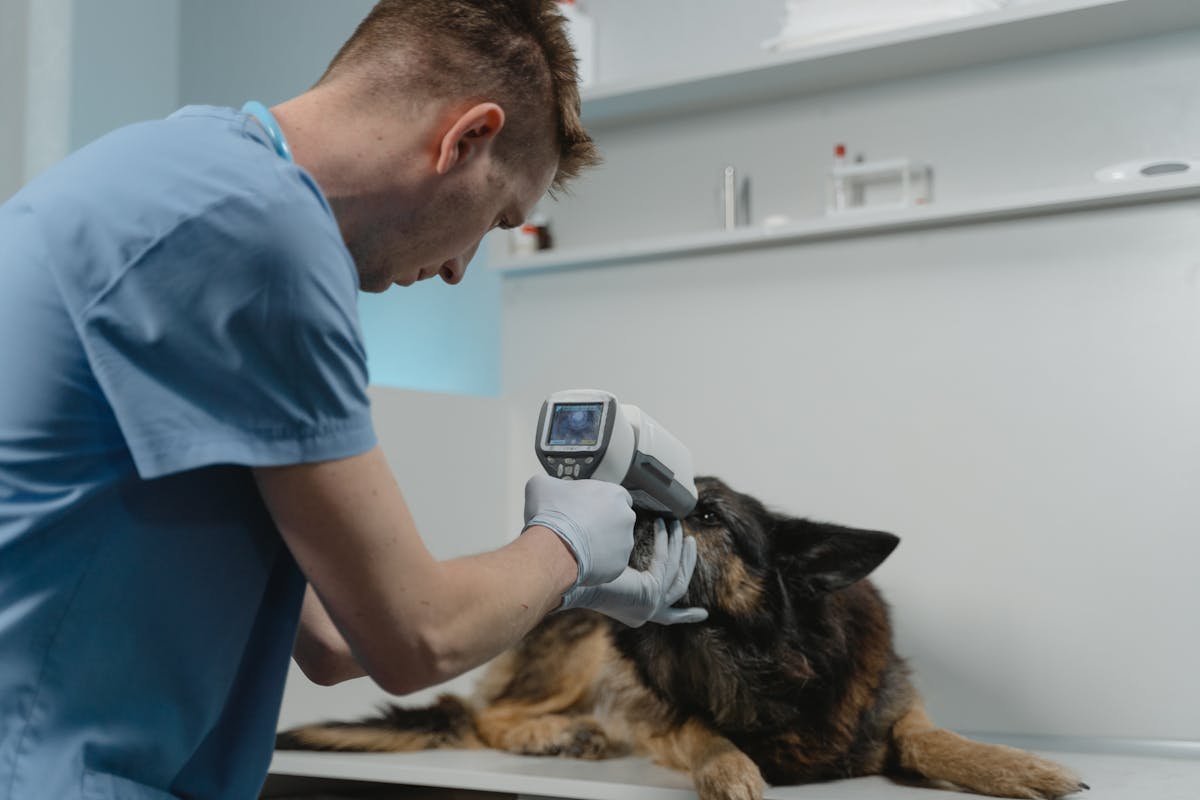

When people picture the emotional weight of veterinary end-of-life care, they usually picture the veterinarian — the one who signs the paperwork, delivers the diagnosis, gives the injection. Rarely do they picture the technician standing beside them: the one who placed the catheter, who's been the friendly, familiar face during every visit for years, who holds a struggling patient still with practiced gentleness, and who will do this same thing again in twenty minutes for a different family. Vet techs are the overlooked frontline of pet loss, absorbing grief in volumes most professions never ask of anyone, with far less recognition, pay, or support than the role demands.
A Job Built Around Repeated Loss
A veterinarian might perform several euthanasias in a single day; a technician is present for most of them, plus the exam room conversations, the phone calls checking on a pet who didn't make it through the night, and the cleanup afterward. Research on veterinary teams has consistently found that credentialed technicians report some of the highest rates of compassion fatigue and burnout of any profession studied, often higher than the veterinarians they work alongside. Part of this comes from a simple structural reality: technicians frequently spend more one-on-one time with an animal than anyone else in the building, including, at times, the family.
And yet technicians are rarely the ones grief resources are built around. Support groups, continuing education on compassion fatigue, and media coverage of veterinary burnout tend to center the doctor. The technician moves to the next room.
What Techs Actually Carry
The relationships nobody accounts for
Technicians often build years-long relationships with return patients — the dog who comes in monthly for chemotherapy, the cat whose blood draws they've learned to make painless through sheer repetition and patience. When that patient dies, the loss is real and personal, but it rarely gets acknowledged as a loss in the way a family's grief does. There's no card for the technician. There's often not even five minutes before the next appointment starts.
The physical closeness of dying
Techs are usually the ones physically restraining, positioning, or comforting an animal during their final moments — work that is intimate, tender, and exhausting in ways that are hard to explain to people outside the field. One technician described it this way: "I am the last set of hands most of these animals ever feel. That's not something you get trained for. You just carry it."
- Compassion fatigue that compounds. Unlike a single hard day, this is loss stacked on loss, week after week, with little built-in recovery time between cases.
- Moral distress. Techs frequently disagree, internally, with a family's decision to euthanize too early or wait too long, but have no authority to influence that decision, only to carry out the process with professionalism.
- Financial strain layered on emotional strain. Veterinary technicians are frequently underpaid relative to the emotional and physical demands of the job, which research has linked to elevated rates of anxiety, depression, and even suicidal ideation within the profession.
- Being everyone's steady presence. Techs often manage the family's grief, the veterinarian's workload, and their own emotions simultaneously, with little space carved out for the third one.
“They hold the leash, the needle, and the family's hand, and then they go hold the next family's, twenty minutes later — and somehow we rarely ask how they're doing.”
What Actually Helps
Veterinary teams and researchers who study this field point to a few concrete practices that make a measurable difference, not vague wellness slogans but structural changes.
- Built-in debriefs after difficult cases, even five minutes, rather than moving straight to the next appointment.
- Rotating who handles back-to-back euthanasia appointments so the emotional load isn't concentrated in one person's day.
- Access to counseling specifically trained in veterinary compassion fatigue, not generic employee assistance programs unfamiliar with the field.
- Leadership that names the loss out loud — acknowledging a hard case in a team meeting rather than letting it disappear into the schedule.
If You're a Pet Owner Reading This
You can help more than you might think. A simple, genuine "thank you, this must be hard for you too" to the technician in the room does more than most people realize. So does writing their name, specifically, into a thank-you card instead of addressing it only to "the doctor." These small acknowledgments cost you nothing and tell someone doing quietly enormous emotional labor that it was seen.
Something that may help
Book: Fighting for Their Lives: Inside the Hidden World of Animal Rescue
A candid look at compassion fatigue and resilience among the people who care for animals professionally, drawn from interviews across shelters and veterinary teams.
→ Search on AmazonThis is an affiliate link. PawsHush may earn a small commission at no extra cost to you, which helps keep this site free.